Investor Guides · 15 min read
House Flipping in Tampa Bay 2026: A Contractor's Honest Guide
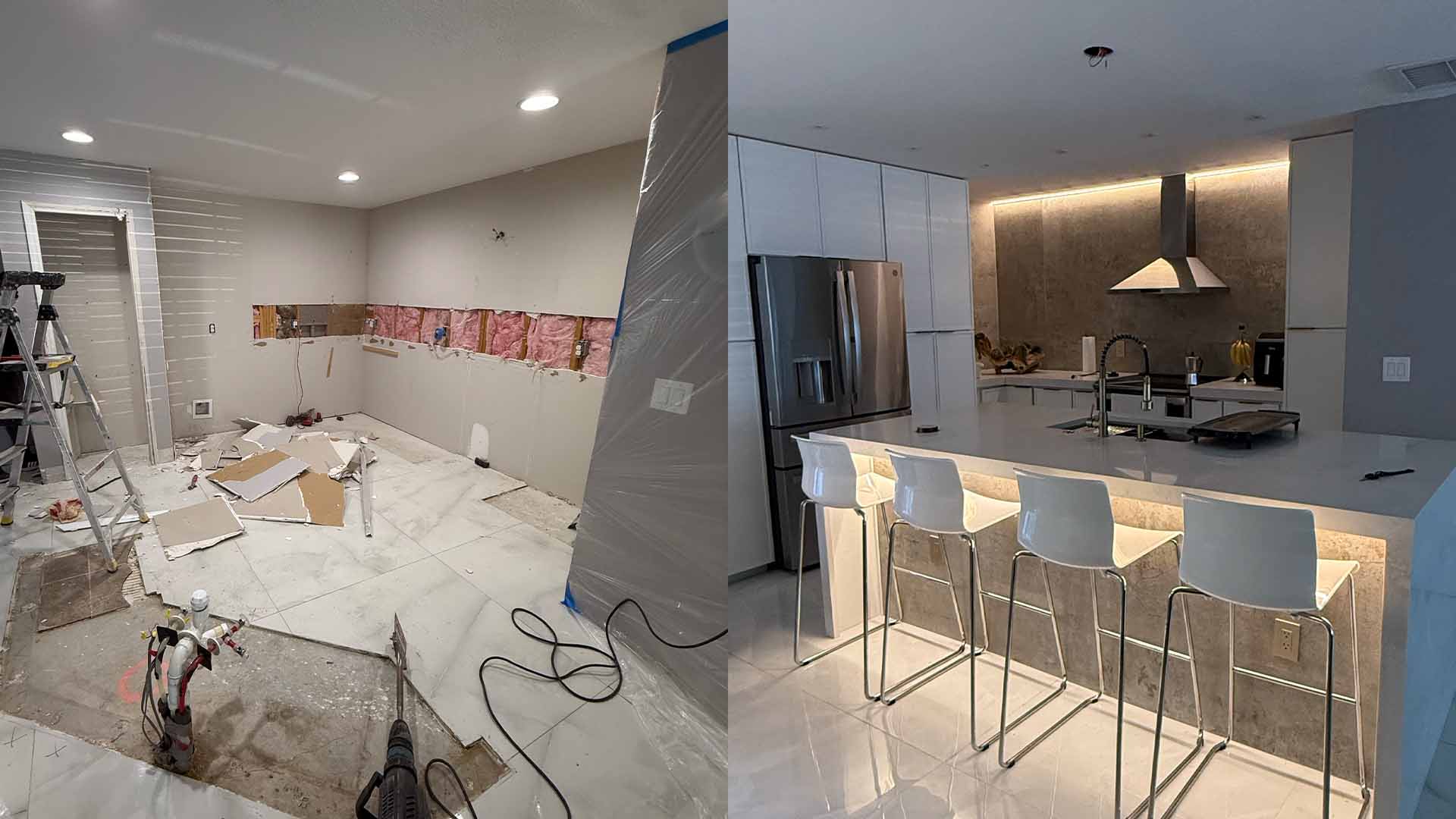
House flipping in Tampa Bay has matured. The easy money of 2020–2022 — where you could paint, re-floor, and sell at a $50,000 profit — has been replaced by a market that rewards discipline, accurate scoping, and local knowledge. Properties still flip profitably in Tampa Bay, but the margin for error has narrowed.
This guide is written from the contractor's perspective. We're not the ones finding the deals or running the comps — that's your job (or your agent's). But we're the ones who turn a purchase into a sellable product, and we've seen firsthand what separates profitable flips from break-even headaches. For detailed renovation costs, see our investment property ROI guide.
Tampa Bay flip market conditions in 2026
The Tampa Bay housing market in 2026 is characterized by moderate inventory, steady demand, and price appreciation that's positive but not explosive. For flippers, this means:
- Deals exist but require more effort to find. Off-market acquisitions, wholesaler relationships, and auction purchases are more common than MLS deals for profitable flips.
- Buyer expectations are high. Move-in ready means updated kitchen, modern bathrooms, new flooring, fresh paint, and functioning systems. Buyers are not paying premiums for cosmetic-only updates anymore.
- Days on market for well-renovated flips: 15–45 days in most Tampa Bay submarkets. Poorly priced or under-renovated properties sit longer.
- Interest rates affect your holding costs. At current rates, every month you hold an unsold property adds $2,000–$4,000+ in carrying costs. Speed and accuracy matter more than ever.
- Insurance costs are part of the equation. Buyers factor in insurance when determining what they can afford. Properties with newer roofs and updated electrical are more attractive.
Finding flip properties in Tampa Bay
We're contractors, not real estate agents — but we see where our investor clients find their best deals:
- Wholesalers: the most common source for Tampa Bay flippers. Build relationships with 2–3 reliable wholesalers who understand your buy criteria.
- Driving for dollars: neighborhoods in transition — Seminole Heights, parts of Town 'N' Country, East Tampa, and sections of St. Pete — often have distressed properties that haven't hit any list yet.
- Auctions (county, bank, and online): Hillsborough County tax deed auctions, bank REO auctions, and platforms like Auction.com. Inspect before you bid — auction purchases are as-is.
- Direct mail and cold outreach: targeting absentee owners, inherited properties, and pre-foreclosure lists.
- MLS: occasionally viable, but expect tighter margins. The best MLS deals are usually properties that have been sitting — often because of condition issues other investors passed on.
Pre-purchase inspection: the step investors skip
This is the step that separates profitable flippers from the ones who call us panicking about a $20,000 surprise. Before you close on a property, you need a realistic scope of work and cost estimate — not a napkin number.
- Walk the property with your contractor before closing. A 30-minute walkthrough can identify $10,000–$50,000 in hidden costs: termite damage, aluminum wiring, polybutylene plumbing, failed HVAC systems, slab issues, and Chinese drywall.
- Get a rough scope and budget estimate before your offer. You don't need a line-by-line Xactimate — you need to know whether the property is a $30,000 renovation or a $100,000 renovation.
- Inspect the roof. A $15,000–$25,000 roof replacement that wasn't in your budget can kill a deal. Tampa Bay's sun and storms mean roofs age fast.
- Check the electrical panel. Federal Pacific and Zinsco panels (common in Tampa homes built 1960–1990) need replacement ($3,000–$6,000) and may not be insurable.
- Run the HVAC. If the system is 15+ years old, budget for replacement ($5,000–$12,000). Buyers and lenders expect functional AC in Florida.
Renovation planning and scoping
Once you've closed, the clock starts. Holding costs accrue daily, so the renovation plan needs to be ready before you get the keys.
- Finalize the scope of work with your contractor within the first week. Every design decision, material selection, and layout choice should be locked before demo.
- Use the ARV to set the budget ceiling. Your all-in cost (purchase + reno + holding + selling) should stay below 65–70% of ARV. See our ROI guide for budgeting specifics.
- Prioritize impact per dollar: paint, flooring, kitchen, primary bath, curb appeal — in roughly that order.
- Don't move plumbing or walls unless the layout is genuinely dysfunctional. Structural changes cost $5,000–$15,000 and add 2–4 weeks to your timeline.
- Select materials before demo starts. Cabinet lead times (4–8 weeks for semi-custom), countertop fabrication (2–3 weeks), and specialty tile orders can all hold up a project.
Typical flip renovation budgets in Tampa Bay
Here's what Tampa Bay flip renovations actually cost in 2026, by scope:
| Scope | Typical Tampa cost | Best for |
|---|---|---|
| Cosmetic flip (paint, flooring, fixtures, cleanup) | $15,000 – $30,000 | Properties that are structurally sound with functional systems. Lipstick on a well-boned house. |
| Standard flip (kitchen, baths, flooring, paint, minor repairs) | $30,000 – $65,000 | Dated 1970s–1990s homes that need modernization but not structural work. |
| Full rehab (gut kitchen/baths, systems, roof, structural) | $65,000 – $120,000+ | Distressed properties with deferred maintenance, outdated systems, and layout issues. |
| Major renovation / addition | $120,000 – $250,000+ | Properties where adding square footage or a major addition is justified by ARV. |
Flip timelines in Tampa Bay
Time is money on a flip — literally. Here's what realistic timelines look like:
- Cosmetic flip: 3–6 weeks of renovation, 2–6 weeks to sell. Total: 5–12 weeks from close to close.
- Standard flip: 8–14 weeks of renovation (including permits), 2–6 weeks to sell. Total: 10–20 weeks.
- Full rehab: 12–20 weeks of renovation, 3–8 weeks to sell. Total: 15–28 weeks.
- Permit timeline is the wildcard. Hillsborough County runs 2–4 weeks for residential permits. Pasco is 1–3 weeks. Pinellas varies by city, 2–5 weeks. After a busy storm season, all three stretch longer.
- Cabinet lead times are the other major timeline risk. Order cabinets the week you close, not the week you need them.
The most common flip mistakes we see in Tampa Bay
- Not inspecting before purchase. The $500 you saved on an inspection costs you $20,000 in surprises.
- Over-improving for the neighborhood. A $60,000 kitchen in a $250,000 neighborhood is a donation, not an investment.
- Underestimating permits. Tampa Bay permits are not optional, and they add time. Budget for it.
- Changing the scope mid-project. Every change order adds cost and time. Lock the scope before demo.
- Skipping the HVAC replacement. A functional but 20-year-old AC system will become a negotiation point with every buyer and can derail financing.
- Ignoring curb appeal. The listing photos are the first showing. Invest in the exterior before the interior.
- Using unlicensed contractors to save money. If the work fails inspection or a buyer's inspector flags it, the fix costs more than the savings.
- Pricing based on what you spent, not what the market supports. The market doesn't care about your renovation budget — it cares about comps.
Working with a contractor on a flip
The contractor relationship is the most important relationship in a flip. Here's how to make it work:
- Find a contractor who understands investor timelines and budgets. Not every good remodeler is a good flip contractor — the pace and priorities are different.
- Get an itemized scope and fixed-price contract. Lump-sum quotes hide cost exposure. You need to see every line item.
- Agree on a timeline with milestones. Demo complete by date X, rough-ins by date Y, cabinets installed by date Z.
- Make all material selections before the project starts. Contractor delays waiting for material decisions are the most preventable delays in any flip.
- Communicate clearly about budget boundaries. A good contractor will tell you when a design choice doesn't make sense for the property's price point.
- Pay on a milestone schedule tied to completed work — not on a calendar schedule. This aligns incentives.
Frequently Asked Questions
Is house flipping still profitable in Tampa Bay in 2026?
+
Yes, but margins are tighter than 2020–2022. Profitable flips require accurate ARV analysis, disciplined budgeting (all-in cost at or below 70% of ARV), and efficient execution. The easy-money era is over, but well-executed flips consistently return 15–30% in Tampa Bay.
How much does the average flip renovation cost in Tampa Bay?
+
A standard flip renovation (kitchen, baths, flooring, paint) runs $30,000–$65,000 in Tampa Bay. Cosmetic flips (paint and flooring only) cost $15,000–$30,000. Full rehabs with system replacements and structural work run $65,000–$120,000+.
How long does a flip take in Tampa Bay?
+
A cosmetic flip takes 5–12 weeks from close to close. A standard flip runs 10–20 weeks. A full rehab can take 15–28 weeks. Permit timelines (1–5 weeks depending on county) and cabinet lead times (4–8 weeks) are the biggest schedule risks.
What are the best neighborhoods to flip in Tampa Bay in 2026?
+
Neighborhoods in transition offer the best margins: Seminole Heights, parts of Town 'N' Country, East Tampa, sections of St. Pete (especially south St. Pete), and older subdivisions in Brandon and Riverview. Established upscale neighborhoods offer lower margins but faster sales.
Do I need permits for a flip renovation in Tampa?
+
Yes, for any work involving electrical, plumbing, structural changes, roofing, or HVAC. Cosmetic work (paint, flooring, fixtures) typically doesn't require permits. Pulling permits protects you legally and ensures the work passes inspection — which matters to buyers, appraisers, and lenders.
Does PFG Constructions work with house flippers?
+
Yes. We work with real estate investors across Tampa Bay on flip renovations, from cosmetic refreshes to full rehabs. We provide itemized scoping, realistic timelines, and budget-conscious execution. Contact us to discuss your next project.
Want a real number on your project?
We give itemized, no-pressure quotes for Tampa Bay kitchen, bath, and full-home remodels. Most clients hear back the same business day.
Related guides
Investor Guides
Investment Property Renovation ROI: Where to Spend for Maximum Return
Cost Guides
Kitchen Remodel Cost in Tampa 2026: Real Pricing, Honest Ranges
Cost Guides
Bathroom Remodel Cost in Tampa 2026: What Local Homeowners Actually Pay
Cost Guides