Insurance & Restoration · 12 min read
Fire Damage Restoration: What to Do in the First 48 Hours
A house fire is one of the most disorienting experiences a homeowner can face. Even a small kitchen fire can leave a home with smoke damage in every room, and the cleanup process is nothing like regular cleaning. What you do in the first 48 hours after a fire directly affects how much of your property can be saved and how much your insurance claim will cover.
This guide is written from the contractor side — what we wish every homeowner knew before we arrive on site. If you're also dealing with smoke and odor, see our smoke and odor removal guide. For the insurance claims process specifically, read our insurance claim filing guide.
Hour 0–4: Safety and access
The fire department will determine when the structure is safe to enter. Until they clear the property, do not go inside. Even after clearance, structural integrity may be compromised — load-bearing elements can be weakened by heat without visible damage.
- Do not re-enter until the fire department issues clearance. Even a small fire can compromise structural elements.
- When you do enter, wear an N95 mask and closed-toe shoes. Soot is carcinogenic, and debris can include nails, glass, and sharp edges.
- Turn off utilities if they haven't been shut off: gas, electricity, and water (unless the fire department has already done this).
- If the structure has significant damage, contact a licensed contractor for a structural assessment before spending extended time inside.
- Secure pets and arrange temporary housing. Your homeowners insurance likely covers Additional Living Expenses (ALE) — activate this with your carrier early.
Hour 4–12: Insurance notification and documentation
Contact your insurance carrier as soon as it's safe to do so. Most Florida policies require 'prompt' notification, and fire damage is a time-sensitive claim. The sooner the adjuster is assigned, the sooner restoration can begin.
- Call your insurance company and file the claim. Get a claim number and adjuster contact information.
- Document everything before any cleanup begins. Photograph and video every room, including rooms that appear undamaged (smoke damage can be invisible at first).
- Photograph fire-damaged structural elements: charred framing, melted wiring, destroyed fixtures, damaged roofing.
- Inventory damaged personal property — furniture, electronics, clothing, documents. Include photos, approximate values, and ages.
- Get a copy of the fire report from the fire department. Your adjuster will need it for the claim file.
- Contact your mortgage company. Most lenders require notification of fire damage and may have specific requirements for insurance payouts.
Hour 12–24: Emergency board-up and securing the property
If the fire has breached the building envelope — blown out windows, damaged the roof, or burned through exterior walls — emergency board-up is required to prevent further damage from weather, animals, and unauthorized entry.
Board-up is covered by your insurance policy as part of your duty to mitigate further damage. A licensed restoration contractor can handle this and bill it directly to the claim.
- Board up broken windows, damaged doors, and any openings in the roof or walls.
- Tarp compromised roof sections to prevent rain intrusion (critical in Tampa Bay's afternoon thunderstorms).
- Secure the property against unauthorized entry. Fire-damaged properties are unfortunately targets for theft.
- If possible, remove high-value items (jewelry, important documents, electronics) to a secure location.
Hour 24–48: Soot, smoke, and water damage
Here's what most homeowners don't realize: the fire itself may have been contained to one room, but soot and smoke damage can affect every surface in the home. And the water used to extinguish the fire creates its own damage.
Soot is acidic. Left on surfaces for more than 48–72 hours, it permanently stains paint, fabric, wood finishes, and even stone. The clock is ticking from the moment the fire is out.
- Do not attempt to clean soot yourself with regular household cleaners. Improper cleaning methods can spread soot and make stains permanent. Soot requires specialized dry-cleaning sponges, chemical cleaners, and professional equipment.
- Ventilate the property if it's structurally safe — open windows to reduce smoke concentration.
- Do not turn on the HVAC system. Smoke particles in the ductwork will redistribute throughout the home. HVAC cleaning is a separate and important step.
- Address fire-suppression water damage immediately. Standing water from firefighting hoses can cause secondary damage within hours in Tampa's heat. See our water damage guide for the drying process.
- Inventory food, medications, and cosmetics for disposal. These items are not salvageable after smoke exposure, and your insurance will cover replacement.
The professional fire restoration process
After the initial 48 hours, professional fire restoration follows a structured process. Here's what it looks like from start to finish:
- Structural assessment. A licensed contractor evaluates framing, load-bearing walls, roof structure, and foundation for heat damage. This determines whether the structure is repairable or requires partial/full demolition.
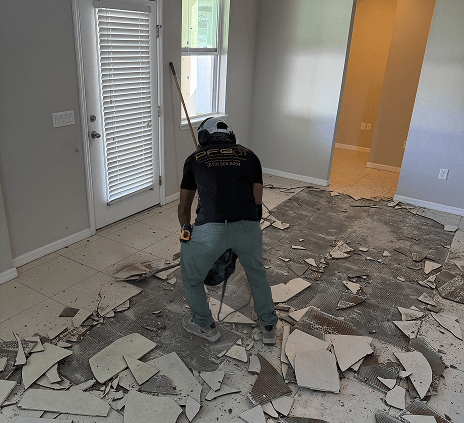
- Demo of fire-damaged materials. Charred drywall, insulation, framing, roofing, and flooring are removed. Demo scope is guided by both visible damage and thermal damage testing.
- Soot and smoke removal. Professional cleaning of all salvageable surfaces using dry sponges, chemical cleaners, and media blasting for exposed wood. See our smoke odor removal guide.
- Odor elimination. Thermal fogging, ozone treatment, or hydroxyl generators neutralize embedded smoke odor in materials that aren't being replaced.
- HVAC cleaning and ductwork. Complete cleaning and decontamination of the air handling system, ductwork, and filters.
- Structural rebuild. Replacement of framing, drywall, electrical, plumbing, roofing, flooring, and finishes. This is the longest phase and may take 4–12 weeks depending on scope.
- Final inspection and certificate of occupancy. Once rebuild is complete, inspections verify code compliance. Your insurance RCV supplement is paid after you submit final receipts.
Fire damage restoration cost in Tampa Bay
Fire restoration costs vary dramatically based on the extent of damage. Here are realistic Tampa Bay ranges for 2026:
| Damage level | Typical Tampa cost (2026) | What's typically involved |
|---|---|---|
| Minor (small kitchen/room fire, contained) | $5,000 – $20,000 | Soot cleaning, odor treatment, paint, minor drywall/cabinet replacement |
| Moderate (one section of home, structural damage) | $20,000 – $75,000 | Partial demo, structural repair, full soot/smoke remediation, rebuild of affected rooms |
| Major (multiple rooms, significant structural) | $75,000 – $200,000+ | Extensive demolition, structural rebuilding, full HVAC replacement, complete interior restoration |
| Total loss | $200,000 – $500,000+ | Full demolition and rebuild or new construction |
Working with your insurance adjuster on fire claims
Fire claims in Florida are typically large claims, and the process can take months from start to finish. Here's how to work effectively with your adjuster:
- Be present for the adjuster's inspection. Walk them through every area of damage, including smoke-affected areas that may appear undamaged.
- Have your restoration contractor present if possible. They can identify structural damage, hidden smoke damage, and scope that the adjuster might miss.
- Request a copy of the Xactimate estimate the adjuster creates. Compare it to your contractor's scope.
- Understand the ACV/RCV payment structure. You'll receive the depreciated value (minus deductible) first, and the replacement cost supplement after repairs are complete. See our insurance guide for details.
- File supplements as needed. Hidden damage discovered during demolition (common with fire) is covered — your contractor should document and submit supplemental claims as the work progresses.
Preventing fire damage in your Tampa home
- Install smoke detectors on every level and in every bedroom. Test monthly and replace batteries annually.
- Keep fire extinguishers in the kitchen, garage, and near any fireplace or grill. Know how to use them.
- Maintain your dryer vent. Lint buildup is one of the leading causes of residential fires.
- Have your electrical panel inspected if your home was built before 1980. Federal Pacific and Zinsco panels (common in older Tampa homes) are known fire hazards.
- Don't overload circuits, especially in older homes. Space heaters, window AC units, and kitchen appliances on the same circuit are a common cause of electrical fires.
- Create and practice a fire escape plan with your family. Know two exits from every room.
Frequently Asked Questions
How long does fire damage restoration take?
+
Minor fire damage (contained to one room, mostly smoke and soot) can be restored in 2–4 weeks. Moderate damage with structural repair typically takes 6–12 weeks. Major fire damage requiring extensive structural rebuilding can take 3–6 months or longer. The insurance process adds time to all of these estimates.
Does homeowners insurance cover fire damage in Florida?
+
Yes. Fire damage is one of the most comprehensively covered perils in a standard Florida HO-3 policy. Coverage typically includes structural damage, personal property, additional living expenses (temporary housing), and debris removal. Arson by the policyholder is excluded.
Can I clean up fire damage myself?
+
Minor soot on hard, non-porous surfaces can sometimes be cleaned, but we recommend professional restoration for any fire that involved open flame or significant smoke. Soot is carcinogenic, improper cleaning can cause permanent staining, and DIY attempts can void portions of your insurance claim.
What causes the most damage in a house fire — the fire or the smoke?
+
In most residential fires, smoke and soot damage affects a larger area than the fire itself. A fire contained to one room can produce smoke damage throughout the entire home. The water used to extinguish the fire also causes secondary damage. All three — fire, smoke, and water — are covered under your insurance claim.
Should I turn on my AC after a fire?
+
No. Do not turn on your HVAC system after a fire. Smoke particles in the return ducts will be redistributed throughout the entire home, contaminating rooms that may have been unaffected. Your HVAC system, ductwork, and filters need to be professionally cleaned before use.
How do I get smoke smell out of my house after a fire?
+
Professional smoke odor removal uses thermal fogging, ozone generators, or hydroxyl generators to neutralize embedded odor molecules. Regular air fresheners and cleaning products don't reach odor that has penetrated into framing, insulation, concrete, and soft materials. See our smoke odor removal guide for the full process.
Want a real number on your project?
We give itemized, no-pressure quotes for Tampa Bay kitchen, bath, and full-home remodels. Most clients hear back the same business day.
Related guides
Insurance & Restoration
How to File an Insurance Claim for Property Damage in Florida (2026 Guide)
Insurance & Restoration
Smoke and Odor Removal After a Fire: Process, Cost, and What to Expect
Insurance & Restoration
Emergency Board-Up Services After a Storm: What Homeowners Need to Know
Insurance & Restoration