Construction Guides · 13 min read
ICF vs Wood Frame Construction in Florida: Cost, Durability, and Insurance Savings
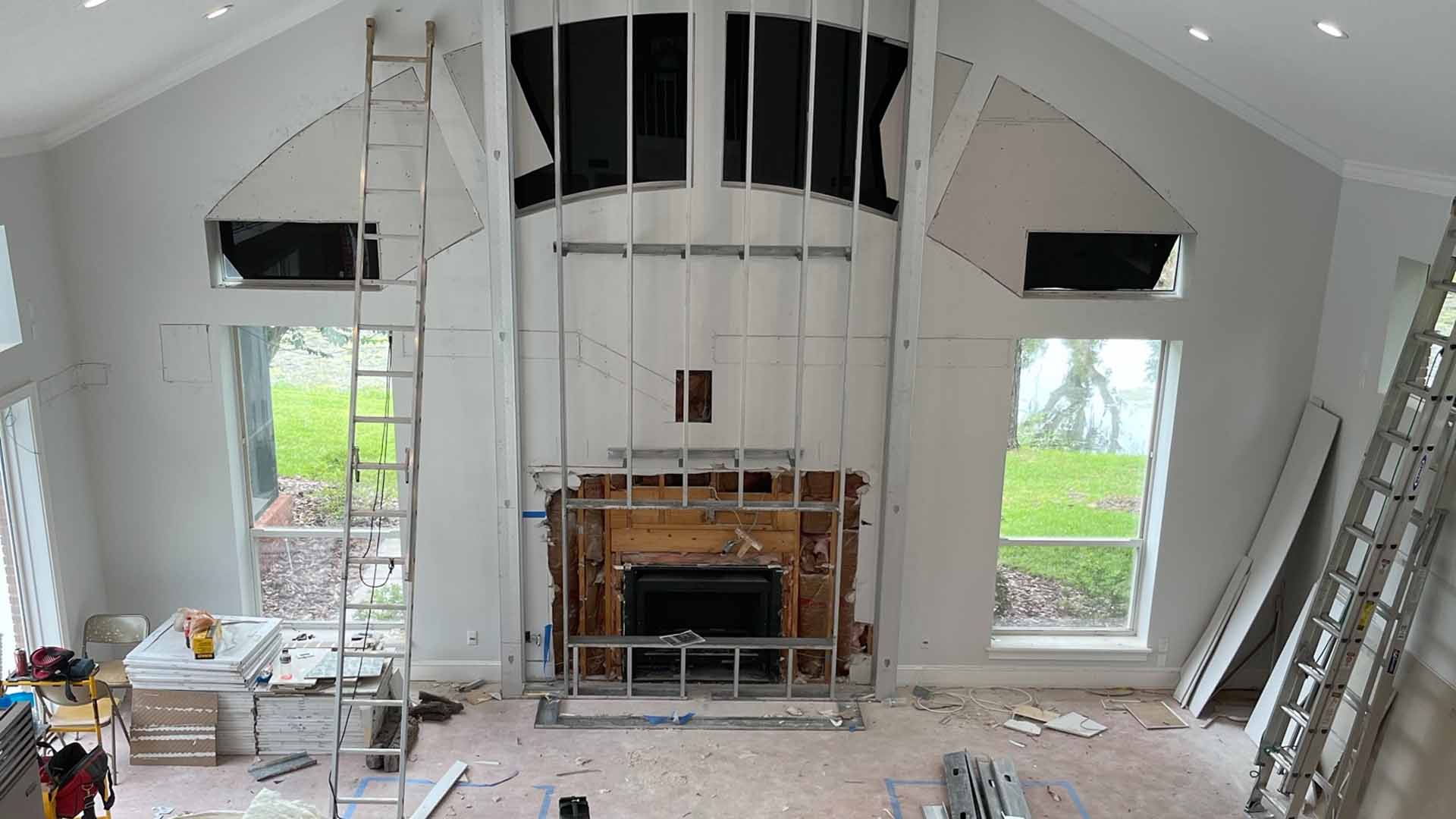
If you're building a new home in Florida, the wall system is one of the most consequential decisions you'll make — and one of the least understood. Most Florida homes use concrete block (CMU) or wood frame. ICF (Insulated Concrete Forms) is a third option that's gaining traction, particularly among owners building for the long term in hurricane-prone areas.
This guide compares ICF and wood frame construction side by side — cost, durability, energy performance, insurance savings, and Florida-specific considerations. If you've already decided on ICF, see our detailed ICF construction cost and benefits guide. For custom home cost breakdowns, see our custom home build cost guide.
What is ICF construction?
ICF (Insulated Concrete Forms) construction uses interlocking foam blocks that serve as permanent formwork for poured concrete walls. The foam stays in place after the concrete cures, providing continuous insulation on both sides of a solid concrete core.
The result is a wall system that combines the structural strength of reinforced concrete with the thermal efficiency of continuous insulation — no thermal bridging, no gaps, and no cavity spaces for moisture or pests.
What is wood frame construction?
Wood frame (stick-built) construction uses dimensional lumber (2x4 or 2x6 studs) to create the structural framework for walls. Cavity insulation (fiberglass batts, spray foam, or blown-in) fills the spaces between studs, and an exterior sheathing (OSB or plywood) provides structural rigidity and weather resistance.
Wood frame is the most common residential construction method in the United States. In Florida, it's used extensively for interior walls and for exterior walls in areas not required to use concrete or masonry by code.
Side-by-side comparison: ICF vs wood frame in Florida
| Factor | ICF | Wood Frame |
|---|---|---|
| Wall cost (installed) | $8 – $12/sq ft | $5 – $8/sq ft |
| Total build premium | 5–12% above wood frame | Baseline |
| Wind resistance | 250+ mph (engineered) | 130–150 mph (Florida code minimum) |
| R-value (wall assembly) | R-23 to R-26 (continuous) | R-13 to R-21 (with thermal bridging) |
| Energy cost savings | 25–40% lower cooling costs | Baseline |
| Insurance premium | 15–30% lower in Florida | Baseline |
| Sound reduction (STC rating) | STC 50–55 | STC 33–38 |
| Termite resistance | Concrete core is termite-proof | Requires termite treatment |
| Moisture resistance | Concrete doesn't absorb water; no cavity for mold | Cavity space can trap moisture; organic materials support mold |
| Fire resistance | 4-hour fire rating | 1-hour (with drywall) |
| Construction speed | 10–15% slower (ICF pour + cure) | Faster framing timeline |
| Ease of modification | Difficult — cutting concrete walls is labor-intensive | Easy — walls can be opened and reconfigured |
Cost comparison on a 2,500 sq ft Florida home
Let's look at what ICF vs. wood frame actually costs on a typical 2,500 sq ft Tampa Bay home in 2026:
| Component | ICF build | Wood frame build |
|---|---|---|
| Exterior walls | $45,000 – $65,000 | $25,000 – $40,000 |
| Foundation (slab) | Same | Same |
| Roof system | Same | Same |
| Interior framing | Wood frame (both) | Wood frame (both) |
| Insulation (additional) | Included in ICF forms | $5,000 – $10,000 |
| HVAC system | Smaller unit possible (savings) | Standard sizing |
| Total build cost impact | +$25,000 – $45,000 (5–12%) | Baseline |
Hurricane resistance: why it matters in Tampa Bay
Tampa Bay sits in a high-velocity hurricane zone. While the area has been fortunate to avoid a direct major hurricane hit in recent decades, the statistical risk remains among the highest in the country. When that storm comes, your wall system is your first line of defense.
ICF walls have been tested to withstand 250+ mph wind loads — far exceeding Florida's code requirements of 130–150 mph depending on location. They also resist flying debris impact that can penetrate wood frame and even CMU walls. After Hurricane Michael (2018), ICF homes in the Panama City area were consistently the ones left standing in neighborhoods where wood-frame and even CMU homes suffered catastrophic damage.
Wood frame homes built to current Florida code are significantly stronger than older construction, but they still rely on the connections between components (straps, clips, bolts) rather than monolithic structural strength.
Energy savings in Florida's climate
In a state where AC runs 8–10 months per year, wall insulation performance directly affects your electric bill. ICF's continuous insulation eliminates thermal bridging (the loss of energy through wood studs, which have a lower R-value than the insulation between them).
On a 2,500 sq ft Tampa Bay home, ICF owners typically report 25–40% lower cooling costs compared to comparable wood-frame homes. At average Tampa Bay electricity rates, that's $600–$1,800/year in savings — compounding annually as utility rates increase.
The reduced heating and cooling load also means you can install a smaller HVAC system. Downsizing from a 5-ton to a 4-ton unit saves $1,000–$3,000 upfront and reduces maintenance costs over the life of the equipment.
Insurance savings in Florida
Florida homeowners insurance carriers offer significant premium reductions for hardened construction. ICF homes typically qualify for 15–30% lower premiums compared to wood frame, based on:
- Superior wind resistance rating (above code minimum).
- 4-hour fire resistance (vs. 1-hour for wood frame with drywall).
- Non-combustible wall construction.
- Reduced water intrusion risk.
- On a Florida home with a $5,000–$8,000 annual premium (common in Tampa Bay), a 20% reduction saves $1,000–$1,600/year. Over 20 years, that's $20,000–$32,000 in insurance savings alone.
- Combined with energy savings, ICF's total annual benefit over wood frame is typically $1,600–$3,400/year. Against a $25,000–$45,000 upfront premium, the payback period is 8–15 years.
When to choose ICF vs. wood frame
The right choice depends on your specific situation:
- Choose ICF if: you're building a forever home (10+ years), you prioritize hurricane resistance, you want lower long-term operating costs, you value quiet interiors, or you're in a coastal or high-wind zone.
- Choose wood frame if: you're building spec homes for sale (where buyers may not pay a premium for ICF), you're on a tight budget with no flexibility, or the build timeline is the primary constraint.
- Consider ICF for exterior walls + wood frame for interior walls: this is the most common approach in residential ICF construction. You get the structural and energy benefits on the building envelope without the cost of ICF on non-structural interior partitions.
ICF construction in Tampa Bay: what to know
ICF is less common than CMU or wood frame in Tampa Bay, which means finding experienced ICF contractors matters. Here's what to look for:
- Verify ICF experience specifically. Installing ICF is not the same as pouring conventional concrete walls. Improper bracing or pour technique can cause blowouts and delays.
- Ask about which ICF brand they use (Nudura, Fox Blocks, Logix, BuildBlock). Each has slight differences in installation, and experience with the specific brand matters.
- ICF construction requires coordination with the concrete supplier for pour scheduling. A good ICF contractor manages this proactively.
- Plan for longer lead times. ICF walls add 2–3 weeks to the framing phase compared to wood frame, primarily due to form installation, bracing, pouring, and cure time.
- We offer ICF construction and custom home design-build across Tampa Bay. Contact us for a free consultation.
Frequently Asked Questions
How much more does ICF cost than wood frame in Florida?
+
ICF walls cost 20–30% more than wood frame on a per-wall basis. On the total build cost, the premium is 5–12% because walls are one component of overall construction. On a 2,500 sq ft Tampa Bay home, that's roughly $25,000–$45,000 more.
Is ICF worth the extra cost in Florida?
+
For long-term homeowners (10+ years), usually yes. Combined energy savings (25–40%) and insurance reductions (15–30%) typically pay back the premium in 8–15 years. Plus you get superior hurricane resistance and sound insulation. For spec builders selling immediately, wood frame usually makes more financial sense.
How does ICF perform in a hurricane?
+
ICF walls are tested to 250+ mph wind loads, far exceeding Florida's 130–150 mph code requirements. After Hurricane Michael (Category 5, 2018), ICF homes in the impact zone consistently survived with minimal damage while surrounding conventional construction suffered catastrophic failures.
Can I get insurance discounts for ICF construction in Florida?
+
Yes. Most Florida insurance carriers offer 15–30% premium discounts for ICF construction, based on superior wind resistance, fire resistance, and structural integrity. On a $5,000–$8,000 annual premium, that's $1,000–$1,600+ in annual savings.
What is the R-value of ICF walls?
+
ICF wall assemblies typically achieve R-23 to R-26 of continuous insulation with zero thermal bridging. By comparison, a 2x4 wood frame wall with fiberglass batts achieves R-13, and a 2x6 wall achieves R-19–R-21, both with thermal bridging through the studs that reduces effective performance.
Does PFG Constructions build ICF homes?
+
Yes. We do ICF construction and custom home design-build across Tampa Bay. We're experienced with multiple ICF brands and can walk you through the cost-vs-benefit analysis for your specific project. Contact us for a consultation.
Want a real number on your project?
We give itemized, no-pressure quotes for Tampa Bay kitchen, bath, and full-home remodels. Most clients hear back the same business day.