Construction Guides · 14 min read
ADU Construction in Tampa Bay 2026: Permits, Costs, and What You Need to Know
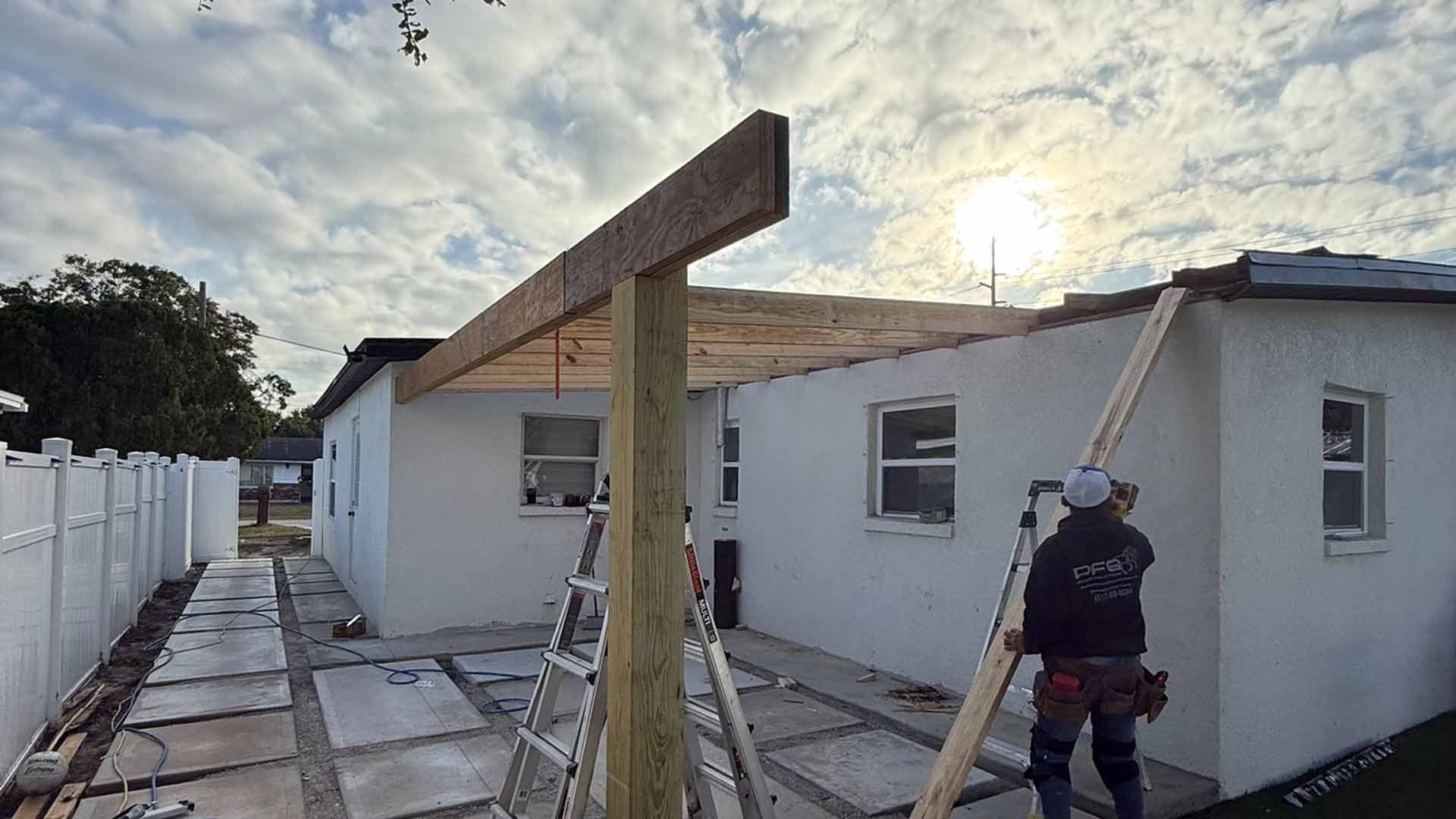
ADUs — accessory dwelling units, also called mother-in-law suites, granny flats, or backyard cottages — have become one of the most requested construction projects in Tampa Bay. Whether you're building for aging parents, adult children, rental income, or a home office, an ADU adds living space and property value without the cost of buying a second property.
But ADU construction in Tampa Bay involves navigating county-specific zoning regulations, permitting requirements, and design constraints that vary significantly between Hillsborough, Pasco, and Pinellas counties. This guide covers what you need to know before you build. For custom home construction, see our custom home building process guide. For cost context, read our custom home build cost guide.
What is an ADU?
An ADU is a secondary residential unit on the same lot as a primary single-family home. It has its own entrance, kitchen, bathroom, and living/sleeping area — a complete, independent dwelling. ADUs can be:
- Detached: a standalone structure in the backyard, separate from the main house. This is the most common type in Tampa Bay.
- Attached: an addition to the existing home with its own separate entrance and full kitchen/bath.
- Garage conversion: converting an existing attached or detached garage into a living unit.
- Above-garage: a dwelling unit built on top of an existing or new garage structure.
- Internal conversion: converting part of an existing home (basement, large bonus room) into an independent unit with separate entrance.
ADU regulations by Tampa Bay county
ADU regulations in Tampa Bay vary by county and municipality. Here's the current landscape as of 2026:
- Hillsborough County: allows ADUs on single-family residential lots. Maximum size is typically 50% of the primary dwelling's square footage or 1,000 sq ft (whichever is less, though specific limits vary by zoning district). Must meet setback requirements, and the primary dwelling owner must maintain residency on the property.
- City of Tampa: has its own ADU ordinance that is generally more permissive than unincorporated Hillsborough. Check with the City of Tampa Development Services for specific requirements.
- Pasco County: ADU regulations vary by zoning district. Some districts allow ADUs by right; others require a special exception. Size limits and setback requirements apply.
- Pinellas County: regulations vary significantly by municipality (St. Petersburg, Clearwater, Largo, etc.). St. Petersburg has been among the more progressive cities for ADU approval. Check with the specific city planning department.
- Florida state legislation has been trending toward loosening ADU restrictions statewide, which may further expand what's permitted in Tampa Bay. Check current local regulations before proceeding.
ADU construction costs in Tampa Bay (2026)
| ADU type | Typical Tampa cost (2026) | Size range |
|---|---|---|
| Garage conversion | $50,000 – $100,000 | 300–500 sq ft |
| Attached addition | $80,000 – $150,000 | 400–800 sq ft |
| Detached new construction (basic) | $100,000 – $175,000 | 400–600 sq ft |
| Detached new construction (mid-range) | $150,000 – $225,000 | 600–900 sq ft |
| Detached new construction (high-end) | $200,000 – $350,000+ | 800–1,200 sq ft |
| Above-garage unit | $120,000 – $200,000 | 400–700 sq ft |
Cost breakdown by component
| Component | Typical share | Cost range (600 sq ft detached) |
|---|---|---|
| Foundation and site work | 10–15% | $12,000 – $22,000 |
| Framing and structural | 15–20% | $18,000 – $30,000 |
| Roofing | 5–8% | $6,000 – $12,000 |
| Electrical | 8–12% | $10,000 – $18,000 |
| Plumbing | 8–12% | $10,000 – $18,000 |
| HVAC | 5–8% | $6,000 – $12,000 |
| Interior finishes (drywall, paint, trim) | 10–15% | $12,000 – $22,000 |
| Kitchen (cabinets, counters, appliances) | 8–12% | $10,000 – $18,000 |
| Bathroom (tile, fixtures, vanity) | 5–8% | $6,000 – $12,000 |
| Flooring | 3–5% | $4,000 – $8,000 |
| Exterior finishes | 5–8% | $6,000 – $12,000 |
| Permits and impact fees | 5–10% | $5,000 – $15,000 |
The ADU permitting process in Tampa Bay
ADU permitting in Tampa Bay follows the same general process as new construction, with some additional zoning considerations:
- Zoning verification. Confirm your lot is eligible for an ADU. This involves checking the zoning designation, lot size requirements, and any HOA restrictions.
- Site plan review. A site plan showing the ADU location, setbacks, parking, and utility connections is submitted to the county or city planning department.
- Architectural plans. Full construction documents (architectural, structural, MEP) are required, same as a new home — just scaled to ADU size.
- Plan review. The county reviews plans for building code compliance, energy code, and zoning conformance. Timeline: 3–8 weeks depending on jurisdiction.
- Impact fees. Vary by county: typically $5,000–$15,000 for a new ADU. These cover the impact on public infrastructure (roads, schools, utilities).
- Building permit. Once plans are approved and fees paid, the building permit is issued and construction can begin.
- Inspections. Same inspection sequence as a home: foundation, framing, MEP rough-ins, insulation, final.
- Certificate of Occupancy. Issued after all inspections pass. The ADU cannot be occupied until the CO is in hand.
ADU design considerations for Tampa Bay
- Hurricane code. ADUs must meet the same Florida Building Code requirements as primary dwellings — impact windows/doors, hurricane straps, proper roof attachment, and wind-rated construction.
- Separate utility meters. Some jurisdictions require (or recommend) separate electric, water, and gas meters for an ADU. This simplifies billing for rental units and adds $2,000–$5,000 to the project cost.
- Privacy. Design the ADU entrance, windows, and outdoor space to provide privacy for both the ADU and the primary home. Thoughtful orientation prevents neighbor and family friction.
- Accessibility. If building for aging parents, consider ADA-friendly features: zero-threshold entry, wider doorways (36"), curbless shower, lever hardware, and single-floor living.
- Energy efficiency. A well-insulated, energy-efficient ADU costs less to build incrementally and saves significantly on ongoing utility costs. Consider mini-split HVAC (highly efficient for small spaces), LED lighting, and Energy Star appliances.
- Florida-specific materials. Same guidelines as primary homes: concrete block or ICF for exterior walls (in ground-floor applications), impact windows, and humidity-resistant interior materials. See our ICF guide for wall system comparison.
ADU rental income potential in Tampa Bay
One of the primary motivations for ADU construction is rental income. Here's what the Tampa Bay rental market supports for ADUs in 2026:
| ADU type | Typical monthly rent (Tampa Bay 2026) | Annual income |
|---|---|---|
| Studio / efficiency (300–400 sq ft) | $1,000 – $1,400 | $12,000 – $16,800 |
| 1-bedroom (400–600 sq ft) | $1,200 – $1,800 | $14,400 – $21,600 |
| 2-bedroom (600–900 sq ft) | $1,600 – $2,500 | $19,200 – $30,000 |
ADU ROI and financial analysis
ADUs are among the strongest-ROI construction projects in Tampa Bay. Here's a simplified financial analysis for a $150,000 detached 1-bedroom ADU renting at $1,500/month:
- Annual gross rental income: $18,000.
- Annual expenses (insurance, maintenance, vacancy): approximately $3,000–$5,000.
- Annual net income: approximately $13,000–$15,000.
- Simple payback period: 10–12 years.
- Property value increase: ADUs typically add 20–30% of their construction cost to the overall property value immediately, and more once rental income is established.
- Additionally, having a rental-producing ADU makes your property more attractive to future buyers — especially investors and multi-generational families.
- For investment property renovations, see our investment property ROI guide.
Common ADU mistakes to avoid
- Not checking zoning before design. Starting architectural plans before confirming your lot is ADU-eligible wastes time and money.
- Ignoring HOA restrictions. Many Tampa Bay HOAs prohibit or restrict ADUs. Check your CC&Rs before proceeding.
- Building without permits. Unpermitted ADUs are code violations and cannot be legally rented. They also create problems at resale — title companies and lenders flag them.
- Underestimating utility costs. Running new water, sewer, and electrical connections to a detached ADU can cost $10,000–$25,000. Budget for it.
- Skipping the foundation survey. ADU placement must account for setbacks, easements, underground utilities, and drainage. A professional survey ($500–$1,000) prevents costly mistakes.
- Over-building. A luxury ADU doesn't command proportionally more rent than a well-built mid-range ADU. Build for the rental market, not your personal taste.
ADU construction timeline in Tampa Bay
- Design and engineering: 4–8 weeks.
- Permitting (zoning + building): 4–10 weeks depending on jurisdiction.
- Site preparation and foundation: 2–3 weeks.
- Framing and roofing: 2–4 weeks.
- MEP rough-ins: 2–3 weeks.
- Interior finishes: 4–6 weeks.
- Exterior finishes and landscaping: 2–3 weeks.
- Final inspections and CO: 1–2 weeks.
- Total: 5–10 months from design start to move-in, depending on size, complexity, and permit timeline.
Frequently Asked Questions
How much does ADU construction cost in Tampa Bay?
+
Garage conversions cost $50,000–$100,000. Detached new construction runs $100,000–$250,000+ depending on size and finishes. Attached additions cost $80,000–$150,000. Impact fees, utility connections, and permit costs add $5,000–$15,000+.
Are ADUs allowed in Hillsborough County?
+
Yes. Hillsborough County allows ADUs on most single-family residential lots, subject to size limits (typically 50% of primary dwelling or 1,000 sq ft), setback requirements, and owner-occupancy requirements. The City of Tampa has its own, generally more permissive, ADU ordinance.
How long does it take to build an ADU in Tampa Bay?
+
5–10 months from design start to move-in. Design and engineering take 4–8 weeks, permitting takes 4–10 weeks, and construction takes 3–5 months depending on size and complexity.
How much rent can I charge for an ADU in Tampa Bay?
+
Studio ADUs (300–400 sq ft) rent for $1,000–$1,400/month. One-bedroom units (400–600 sq ft) rent for $1,200–$1,800/month. Two-bedroom units (600–900 sq ft) rent for $1,600–$2,500/month in the Tampa Bay market as of 2026.
Do I need impact windows for an ADU in Florida?
+
Yes. ADUs must meet the same Florida Building Code requirements as primary dwellings, including impact-rated windows and doors in wind-borne debris zones (which includes most of Tampa Bay's coastal areas).
Does PFG Constructions build ADUs in Tampa Bay?
+
Yes. We build detached ADUs, garage conversions, and attached additions across Tampa Bay. We handle design coordination, permitting, and full construction. Contact us for a free consultation on your ADU project.
Want a real number on your project?
We give itemized, no-pressure quotes for Tampa Bay kitchen, bath, and full-home remodels. Most clients hear back the same business day.
Related guides
Construction Guides
The Custom Home Building Process in Florida: A Step-by-Step Timeline
Cost Guides
Custom Home Build Cost in Tampa Bay 2026: What It Actually Costs Per Square Foot
Investor Guides
Investment Property Renovation ROI: Where to Spend for Maximum Return
Construction Guides